Resource
Halloween Musicals for Kids That Keep Spooky Fun Sweet
The best Halloween musicals for kids balance light suspense with music, humor, and stories....
Learn MoreOrlando Family Stage
The Finest in Family Theater
Key Takeaways:
Teachers searching for a Charlotte’s Web study guide PDF usually want the same things: something free, printable, and ready to use with elementary readers for discussion, writing, and read-aloud work. Solid options exist that walk students through character traits across four sessions.
Charlotte’s Web, though, is not primarily a character-trait exercise. It is a story about friendship, loss, and why one life can matter to another: themes young readers feel before they can fully articulate them. A downloadable guide can frame those themes. Orlando Family Stage’s Arts-Based Learning programs help students inhabit them, building comprehension, empathy, and classroom community through drama, movement, and creative play.
Free resources for teaching Charlotte’s Web are more available than many teachers realize, and knowing where to look saves a lot of planning time. Before downloading, though, it is worth checking a few things so the guide you choose actually fits your students and your classroom goals.
Several trusted literacy organizations offer free, downloadable options. Reading Is Fundamental hosts a publisher-attributed teaching guide at no cost. HarperCollins, the book’s publisher, also links directly to activity and teaching guides on their product page. These are good starting points for building a unit.
Look for grade-level alignment, standards connections, and clear attribution to a reputable source. A guide from a literacy nonprofit or the publisher carries more pedagogical weight than an unattributed worksheet.
Most publisher-distributed and nonprofit-hosted guides are cleared for classroom use, but permissions language is not always prominently displayed. Open the guide itself or check the hosting organization’s terms before distributing copies. When in doubt, a quick email to the publisher’s permissions department gives you a clear answer.
Look for vocabulary appropriate to grades 2 through 5, discussion questions that invite personal connection rather than literary analysis, and activities that work across reading levels. Guides designed for middle or high school readers often rely on essay prompts and thematic abstraction, which can feel inaccessible to younger students or multilingual learners.
A downloadable guide can frame the story and supply discussion questions, but it cannot place students inside it. Charlotte’s Web carries its weight in feeling: in the moment Wilbur realizes Charlotte is gone, in the quiet question of whether one small life is worth saving. Those themes arrive most fully through drama, movement, and conversation. That is the distance a well-designed arts-based lesson covers, and no PDF alone closes it.
A strong Charlotte’s Web guide includes discussion prompts that build empathy and inference, flexible activities that work across whole-group, small-group, and independent settings, and connections to social-emotional learning alongside literacy standards. Not every downloadable resource delivers all three, but knowing what to look for helps teachers choose wisely.
The best Charlotte’s Web discussion questions for elementary students push past “what happened” and into “why does it matter.” Look for prompts that invite inference, empathy, and text evidence, such as asking students why Wilbur is worth saving or what Charlotte’s choices reveal about friendship. Resources like this ReadWriteThink lesson plan model go into depth well.
Strong guides weave character study and theme into the same activities rather than treating them as separate tasks. When students explore concepts such as loyalty, loss, and courage through discussion and writing, their comprehension and emotional literacy grow together.
A flexible guide offers layered entry points. Open-ended vocabulary tasks, short reading-response journals, and character-focused writing prompts can each be adapted across instructional formats without major reworking. The Scholastic discussion guide includes questions adaptable enough to anchor a read-aloud, a literature circle, or an independent reflection.
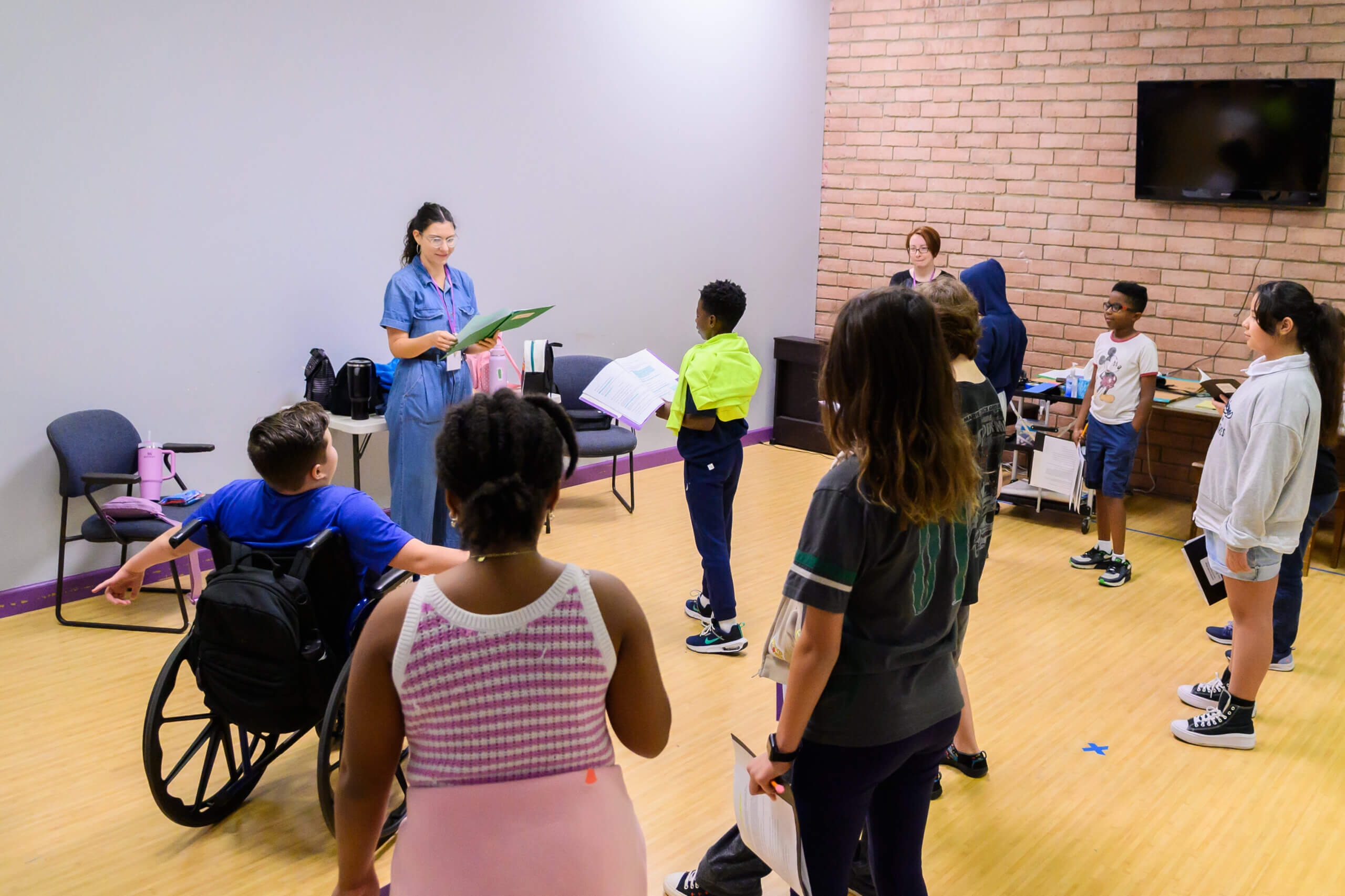
Look for guides that lean on visuals, collaborative talk structures, and multiple ways to respond. When a resource makes room for drawing, movement, or partner conversation alongside writing, it gives more students a genuine way in. Orlando Family Stage’s arts-based residencies are designed with these learners in mind, using drama and puppetry to activate language and build meaning in multimodal ways.
A guide that separates performance tasks, role-play, or creative responses from the “real” comprehension work is telling you something. The strongest resources treat embodied thinking as a legitimate form of meaning-making, not a reward. Orlando Family Stage’s professional development gives educators concrete techniques like tableau and teacher-in-role that slot directly into story-based lessons when the guide opens that door.
A Charlotte’s Web PDF becomes a real classroom activity when its discussion questions are reframed as movement exercises, partner scenes, and visual tasks that invite every learner in. The questions below walk through specific techniques for making that shift.
Movement-based tasks give students another way in. Character maps, gallery walks, and vocabulary tableau exercises allow students to demonstrate their understanding physically. Perspective-taking activities and adjective charts that translate naturally into performance task work especially well for students who find blank-page responses discouraging.
Most discussion questions can be rephrased as a scene or a choice. Ask students to freeze in a position that shows how Wilbur feels when Charlotte first speaks to him. Partner talk works best when one student takes a character’s perspective, and the other responds from their own. Edutopia’s drama strategies show how readers’ theater and teacher-in-role routines build comprehension through repetition and gesture.
Pair students and ask them to retell a scene from memory before opening the book. Quick tableaux of key moments (Charlotte spinning her web, Wilbur learning he will be saved) invite collaboration with almost no materials. These activities make themes like loyalty and courage feel personal, not just literary.
Visuals, gesture, and collaborative storytelling reduce language barriers without reducing rigor. Puppetry Story Drama Residencies from Orlando Family Stage are designed with this in mind, using puppetry and physical storytelling to support vocabulary development and context-building for early childhood through first grade. Movement gives students a way to participate before they have the words.
When students can fill in the blanks but cannot retell the story in their own words, that is a signal. Active meaning-making, role-play, storytelling with a puppet, or a structured partner scene closes the gap between surface-level answers and genuine understanding.
A Charlotte’s Web study guide PDF opens the conversation. Orlando Family Stage is where it continues. Teaching artists work directly alongside classroom teachers through residencies, workshops, and field trips designed to turn reading comprehension into a lived experience. When a student voices Wilbur’s fear through puppetry, or freezes in a tableau of Charlotte’s final act, they are not simply demonstrating understanding. They are inside the story. That is the kind of learning that stays.
Charlotte’s Web arts integration lesson ideas come to life most fully when a teaching artist works alongside the classroom teacher. Using drama to build language, context, and reading comprehension from the inside out gives students a collaborative character to think alongside, deepening vocabulary and empathy at once.
Ready to bring the story off the page? Visit Orlando Family Stage’s Arts-Based Learning programs to explore residencies, workshops, and school partnerships built for exactly this kind of teaching.
Don't miss out on the magic. Grab your tickets now and
make unforgettable memories at Orlando Family Stage!