
Resource
5 Best Indoor Activities for Kids Orlando Families Will Love
Orlando offers a variety of high-quality indoor activities that nurture creativity, empathy, and con...
Learn MoreOrlando Family Stage
The Finest in Family Theater

At Orlando Family Stage, we believe stories can help young people better understand themselves and the world around them. Through our partnership with AdventHealth for Children and the Be a Mindleader initiative, we are proud to support conversations around youth mental health, emotional resilience, and connection. Together, we encourage families to talk openly about feelings, fears, and the challenges children face as they grow.
Orlando Family Stage’s 25/26 Season is Presented by AdventHealth for Children.
At the beginning of Finding Nemo, Marlin’s fear makes complete sense. After surviving a traumatic loss, he becomes deeply protective of his son, Nemo. Early in the story, Marlin promises the tiny clownfish egg, “I will never let anything happen to you.”
It is a promise rooted in love, but also in anxiety.
Throughout the show, Marlin constantly warns Nemo about danger. “The ocean’s not safe.” “You’re too little.” “You can’t swim well.”
Many parents and caregivers recognize this instinct. When we love children deeply, we want to protect them from hurt, disappointment, and risk. But Finding Nemo gently reminds us that overprotection can sometimes communicate something unintended, “I don’t believe you can handle this.”
Nemo begins to internalize those warnings, carrying them as self-doubt. The story gently asks an important question: how do we protect children without teaching them to fear themselves?
One of the most compassionate aspects of the story is that Marlin is never portrayed as a “bad parent.” He is grieving. He is afraid. He is trying to keep his child safe in a world that once hurt him deeply.
That emotional truth matters because children often absorb the anxieties of the adults around them, even when those anxieties come from love. Children build confidence gradually through problem-solving, trust, and opportunities to try things on their own.
Marlin’s journey becomes not just about finding Nemo, but about learning how to let him grow.

“You’ve Got to Let ’Em Go”
The turning point comes during Marlin’s encounter with Crush and the sea turtles in the East Australian Current. Watching Crush calmly allow Squirt to explore independently forces Marlin to reconsider everything he believes about parenting and safety.
When Marlin asks how a parent can possibly know when a child is ready, Crush responds:
“Well, you never really know / But if they’re ever gonna grow / Then you’ve got to let ’em go.”
It’s a line many parents in the audience may feel in their chest.
Anyone who has ever walked a child into school for the first time knows this feeling. You want to protect them from everything. And at the same time, you know you can’t. Crush’s perspective doesn’t erase Marlin’s fear. It simply reframes it. Loving a child does not mean preventing every hard moment. Sometimes it means trusting they can navigate those moments, and knowing you’ll still be there when they need you.
Maybe Nemo Is More Capable Than He Thinks
While Marlin is learning to release fear, Nemo is learning to believe in himself.
At first, Nemo worries that his “lucky fin” makes him weak or incapable. But inside the aquarium, he discovers something transformative: he has strengths that matter to others. Gill and the Tank Gang trust him with important responsibilities, encourage him, and remind him that bravery is not about perfection.
When Nemo says, “I’m scared. What if something goes wrong?” Gill responds by reminding him of the courage he has already shown.
That encouragement changes Nemo’s self-perception. Instead of seeing himself as fragile, he begins to see himself as capable.
Children build confidence gradually through problem-solving, trust, and opportunities to try things on their own. Often, it begins when someone trusts them with something meaningful before they fully trust themselves. Even small moments of independence can change how they see themselves.
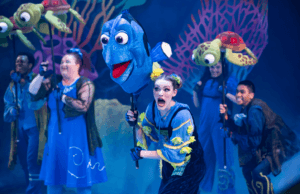
Connection Helps Us Heal
Another powerful emotional thread in the story is the friendship between Marlin and Dory.
Dory’s role in the story is especially meaningful because she never fully changes who she is. She remains forgetful, distractible, and emotionally open throughout the journey. And still, she is essential. She helps Marlin move forward when fear keeps him stuck, and she reminds the audience that someone does not have to be perfect to be valuable, loved, or capable of helping others.
One of the story’s most touching moments comes when Dory tells Marlin:
“When I look at you, I feel… home.”
Connection is a part of how we feel. Relationships, community, and emotional support help us navigate fear and uncertainty. Whether through friendship, family, teachers, or mentors, children need trusted people who remind them they are not alone.
Growing Up Means Learning Together
By the end of Finding Nemo, neither Marlin nor Nemo becomes fearless. Instead, they grow in understanding.
Marlin learns that loving his child means trusting him.
Nemo learns that bravery is possible even when he feels uncertain.
And both discover that confidence and trust grow through connection, encouragement, and shared experience.
At Orlando Family Stage, we believe theatre can help families practice these conversations together. Stories like Finding Nemo give families a shared language for talking about anxiety, independence, trust, and courage. These conversations can sometimes feel difficult to begin anywhere else.
That work is at the heart of AdventHealth’s Mindleader initiative: helping young people develop emotional awareness, resilience, and empathy through honest conversation and supportive relationships.
Because sometimes the bravest thing we can do is trust ourselves, and each other.
Keep the Conversation Going
After seeing Disney and Pixar’s Finding Nemo, these questions can help start meaningful conversations at home:
Sometimes stories help us say the things that are hardest to express on our own.
Learn more about AdventHealth’s Mindleader initiative and how you can support youth mental wellness through everyday empathy and conversation.
Don't miss out on the magic. Grab your tickets now and
make unforgettable memories at Orlando Family Stage!